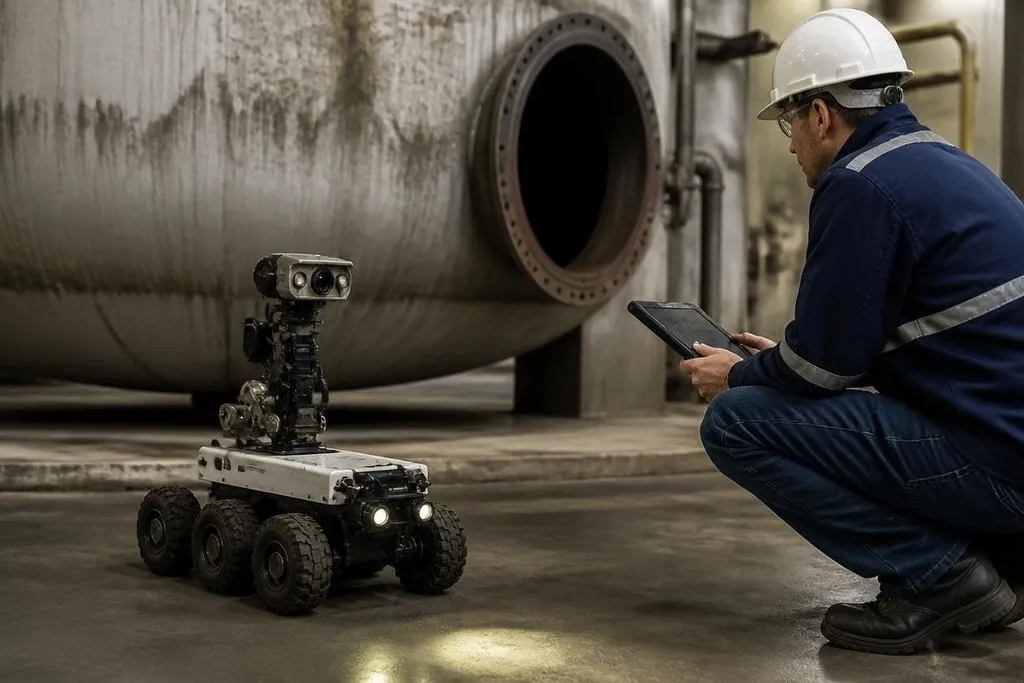
Inspection robots are becoming more useful because many checks happen in places that are hot, dark, narrow, high, or unsafe for long human visits. Their value comes from collecting repeatable images and sensor readings while people stay outside the hazard.
Quick read
- Cameras find visible damage, leaks, blocked paths, and surface changes.
- Thermal, gas, ultrasonic, and LiDAR sensors add information a normal image misses.
- The hard part is turning a robot’s reading into a repair decision.
The work inspection robots take on
A mobile inspection robot can move through a site, stop at set points, and record the same area over time. That repeat pattern matters because a technician can compare new images with earlier ones instead of relying on memory.
The robot may carry a camera for cracks, corrosion, loose parts, or standing water. Thermal sensors can point to heat changes, ultrasonic sensors can help detect flaws in materials, and gas sensors can warn about an unsafe atmosphere. Each tool answers a different inspection question.
The robot does not need to make the repair decision by itself. Its first job is to bring back useful evidence, with the location and time attached, so a person can decide what needs attention.
Why repeat checks matter
A single inspection gives you a snapshot. Repeated inspections can show whether a small change is stable, growing, or linked to a machine’s operating cycle.
That record helps maintenance teams rank work by condition rather than by a fixed calendar. A technician may still need to open a panel, take a measurement, or shut down equipment, but the robot can help point them to the right place first.
This is where inspection robots differ from ordinary remote cameras. A fixed camera watches one view. A mobile robot can visit several points, carry more than one sensor, and change its route when a task requires closer attention.
The limits are clear. Dust, smoke, poor lighting, reflective surfaces, tight spaces, and blocked routes can affect readings or movement.
A robot also needs a safe way to charge, communicate, and stop when people enter its path.
The person stays in the decision loop
Inspection work produces more than pictures. It creates readings that need context: the machine’s normal temperature, the condition of nearby parts, the time of day, and the task taking place when the data was collected.
That context is why human review still matters. Software can flag a change, but a technician knows whether the change points to wear, a planned process, or a sensor problem. The system works best when it sends clear evidence to a person who can act on it.
A thermal image is useful only when it changes the repair plan. For someone comparing inspection robots, Robot24 can help connect a machine’s sensor data to the site, task, and measured result behind it. Those details show whether an alert leads to repair work or adds another file to the archive.
A useful deployment also sets a clear response after every alert. If nobody owns the follow-up, the robot may collect a large archive of readings without reducing risk or repair time.
What to check before buying
The right system depends on the site, the hazard, and the decision the inspection must support. Use this checklist before you compare robot models:
- Name the fault: write down the damage, leak, heat change, or obstruction the robot must find.
- Map the route: check doors, stairs, slopes, narrow gaps, floor surfaces, and areas with poor wireless coverage.
- Choose the sensor: match cameras, thermal imaging, ultrasonic tools, gas sensing, or LiDAR to the fault.
- Set the handoff: decide who reviews an alert, who checks the site, and what starts a repair.
- Test the records: confirm that every reading carries a time and location and can be compared later.
- Plan recovery: define what happens after a blocked route, low battery, lost signal, or false alert.
I'd skip a system that can collect data but gives your team no clear way to review it, compare it, or act on it.
The next useful step is a small route with one inspection question, one chosen sensor, and a named person responsible for the result. If that process works, the robot has earned a larger task.