
- Understanding the Importance of Construction Safety Training
- Components of Successful Construction Safety Training Programs
- Common Challenges in Implementing Construction Safety Training
- Best Practices for Conducting Construction Safety Training
- Measuring the Effectiveness of Construction Safety Training
- Frequently Asked Questions
Understanding the Importance of Construction Safety Training
Why Construction Safety Training is Essential
Construction safety training is critical in creating a safe and efficient work environment. It educates workers on the hazards they may face on the job site and teaches them how to protect themselves and their colleagues. Enhanced awareness and proper training can significantly reduce the likelihood of accidents, which in turn not only saves lives but also minimizes downtime and financial losses for companies.
Research has shown that organizations that prioritize construction safety training experience lower incident rates and have a more engaged workforce. Furthermore, providing extensive safety training demonstrates a company’s commitment to employee well-being, fostering loyalty and trust among workers.
Consequences of Neglecting Safety Training
Failing to implement adequate safety training can lead to dire consequences. Work-related fatalities, injuries, and illnesses can increase, resulting in tragic outcomes for employees and their families. In addition to the human toll, neglecting safety can carry financial repercussions for businesses, including medical costs, legal fees, and workers’ compensation claims.
Moreover, companies may face penalties from regulatory bodies and damage their reputations. A single unsafe incident can lead to a decline in public trust, which adversely impacts future projects and client relationships. Thus, investing in effective safety training is not just a legal requirement; it is pivotal for long-term success.
Key Regulations and Standards
The construction industry is governed by various regulations and standards aimed at ensuring safety. In the United States, the Occupational Safety and Health Administration (OSHA) sets forth mandatory guidelines that all construction companies must adhere to. Programs such as the OSHA 10-Hour and 30-Hour Training Courses serve as fundamental frameworks.
Additionally, adhering to standards established by organizations like the National Safety Council (NSC) and the American National Standards Institute (ANSI) further promotes a culture of safety. Understanding and integrating these regulations into training programs enhances compliance and reduces liability risks.
Components of Successful Construction Safety Training Programs
Types of Training: On-site vs. Off-site
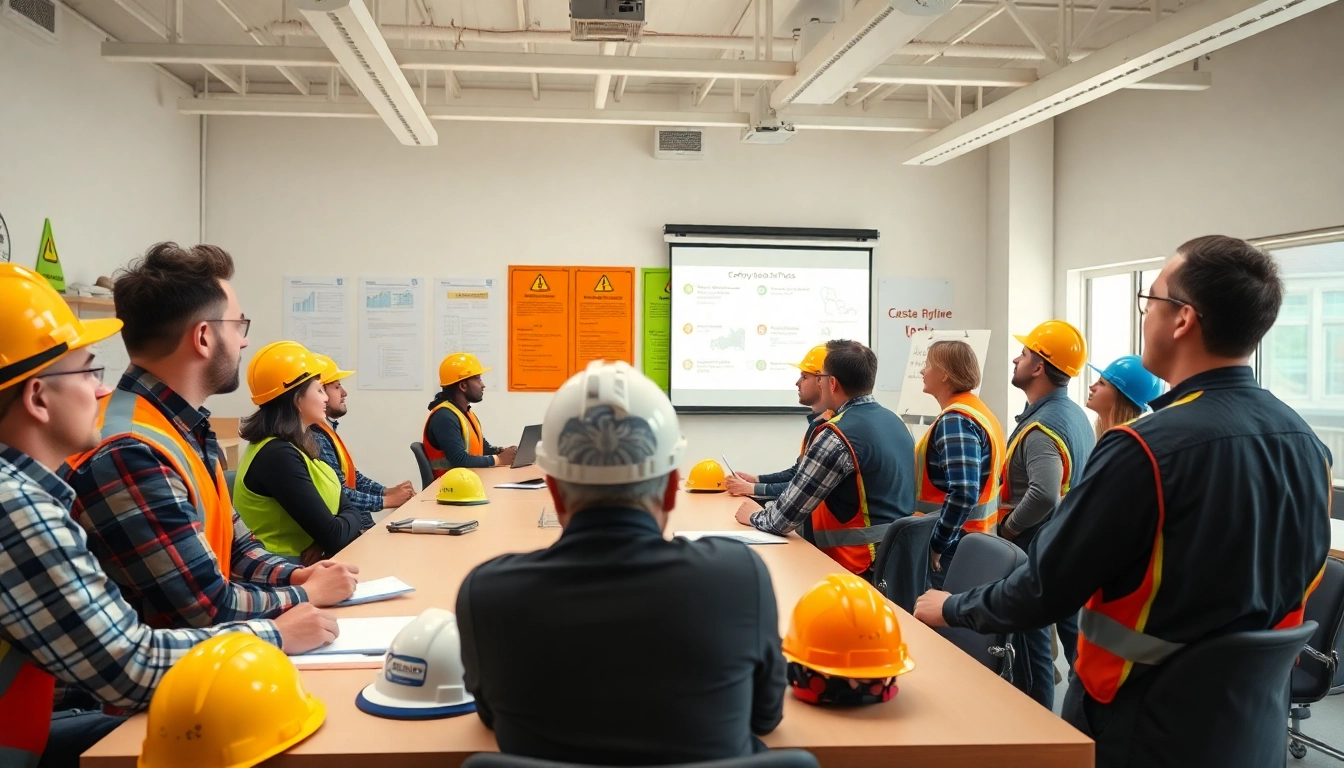
Construction safety training can be categorized into on-site and off-site training. On-site training enables employees to learn in their actual work environment. This setting allows for practical demonstrations of safety protocols related to specific tasks and equipment used. It encourages immediate application of skills and knowledge in real-life scenarios.
On the other hand, off-site training often includes classroom-based instruction or simulations. While it may sacrifice some practicality, it offers controlled learning experiences where foundational knowledge can be established without distractions. This balance of training methods allows companies to cater to diverse learning preferences, significantly improving employee understanding and retention.
Incorporating Hands-On Activities
Hands-on activities are crucial for effective construction safety training. Engaging workers in practical exercises not only reinforces theoretical knowledge but also allows for the application of skills in a safe environment. By simulating real-world scenarios, participants are better equipped to handle potential hazards they may encounter on the job site.
Examples of hands-on activities include using personal protective equipment (PPE), practicing fall protection methods, and engaging in emergency response drills. Such experiences foster confidence and competence, equipping workers with the essential skills needed to recognize dangerous situations and act accordingly.
Utilizing Technology in Safety Training
Technology has revolutionized construction safety training in recent years. Virtual reality (VR) and augmented reality (AR) offer immersive experiences that can significantly enhance understanding and engagement. Workers can navigate simulated environments that mirror real job sites, allowing them to practice safety protocols without the risk of injury.
Furthermore, online training platforms and mobile applications enable flexible learning opportunities, catering to the needs of a diverse workforce. With the ability to track progress and assess skills remotely, training programs can be personalized, ensuring that all employees receive the necessary preparation to maintain safety standards effectively.
Common Challenges in Implementing Construction Safety Training
Overcoming Resistance from Workers
One of the most significant challenges in implementing construction safety training is worker resistance. Often, employees may perceive safety training as an inconvenience or unnecessary. To overcome this, it is essential to communicate the benefits effectively, emphasizing how training efforts directly contribute to their safety and job security.
Engaging employees in conversations about safety, and incorporating their feedback into training programs can help build ownership and accountability. Recognizing and rewarding safe practices further encourages workers to embrace safety training as a valuable component of their professional development.
Addressing Language and Literacy Barriers
In diverse construction environments, language and literacy barriers can hinder effective safety training. When workers are unable to understand the training material or discussions, they may miss critical information, leading to hazardous situations. To combat this, companies should provide training materials in multiple languages and incorporate visual aids that effectively convey safety concepts.
Utilizing simple language and clear illustrations ensures better comprehension. Additionally, employing bilingual trainers or interpreters can bridge gaps, fostering a more inclusive training environment where all workers feel empowered to learn and participate.
Budget Constraints for Training Programs
Budget constraints can pose another barrier to implementing comprehensive safety training programs. To maximize limited resources, companies should prioritize critical training areas based on employee roles and specific hazards prevalent in their work environments. Additionally, leveraging free or low-cost resources, including online courses and local community safety programs, can help mitigate costs.
Investing in safety doesn’t necessarily require extensive financial resources; it often relies on creative approaches to reduce costs while maintaining efficacy. Collaborating with industry associations may provide access to group training discounts and shared resources, allowing smaller companies to stay compliant and safe without straining budgets.
Best Practices for Conducting Construction Safety Training
Creating a Comprehensive Training Schedule
A well-structured training schedule is a blueprint for successful construction safety training. Incorporating regular training sessions into the overall project timeline ensures that safety remains a priority. Each session should cover relevant topics that align with current projects, seasonal hazards, and emerging safety trends.
To ensure effectiveness, schedules should include refreshers and advanced training tailored to the specific needs of employees at different levels of experience. Incorporating feedback from past training sessions allows mentors to adjust their programs, continually improving the learning experience.
Customizing Training for Specific Roles
Recognizing that different roles in construction face unique hazards is essential in customizing training programs. Instead of a one-size-fits-all approach, organizations should tailor training materials to specific roles and responsibilities, ensuring that the content is relevant and practical for all workers.
By distinguishing between various job functions, employees are more likely to engage with the material and retain crucial information that directly applies to their work. Tailored training can also help to address specific skill gaps within the workforce, enhancing overall competency and safety practices.
Regularly Updating Training Materials
Construction safety training materials should not remain static. Regularly updating content not only reflects changes in regulations and industry standards but also keeps employees engaged with fresh information. Utilizing feedback and incident reports to inform revisions can help address emerging risks that may not have been present during prior training sessions.
Incorporating current case studies and real-world examples into training materials fosters a connection between theoretical knowledge and practical application. Continuing education ensures workers remain vigilant and informed, ultimately leading to better safety outcomes on construction sites.
Measuring the Effectiveness of Construction Safety Training
Evaluating Performance and Incident Rates
Measuring the effectiveness of construction safety training goes beyond initial assessments; it necessitates ongoing evaluations of performance metrics and incident rates. Tracking injury and incident trends provides valuable data on the success of training initiatives and highlights areas for improvement.
Companies should establish clear benchmarks and key performance indicators (KPIs) related to safety, allowing for quantitative analysis of training effectiveness over time. Regularly reviewing these statistics can inform necessary adjustments to training approaches, ensuring continuous enhancement of safety practices.
Gathering Feedback from Participants
Soliciting feedback from training participants is vital for refining training programs. Surveys and one-on-one conversations can reveal insights about training effectiveness and areas needing improvement. Understanding workers’ perceptions and experiences allows organizations to identify unforeseen challenges and adapt programs accordingly.
Creating an open dialogue fosters a culture of continuous learning within the company, where employees feel valued and motivated to contribute to safety improvements. This collaborative approach not only enhances training but also promotes shared responsibility for workplace safety.
Continuous Improvement Strategies for Safety Programs
Continuous improvement is critical to maintaining the relevance and efficacy of construction safety training programs. Organizations should regularly review training outcomes and incorporate lessons learned from any incidents into their curriculum.
Establishing a dedicated safety committee can facilitate ongoing discussions about safety protocols, emerging risks, and best practices. By fostering a culture of accountability and learning, companies can create a safe work environment that adapts to the ever-changing construction landscape.
About the Author