
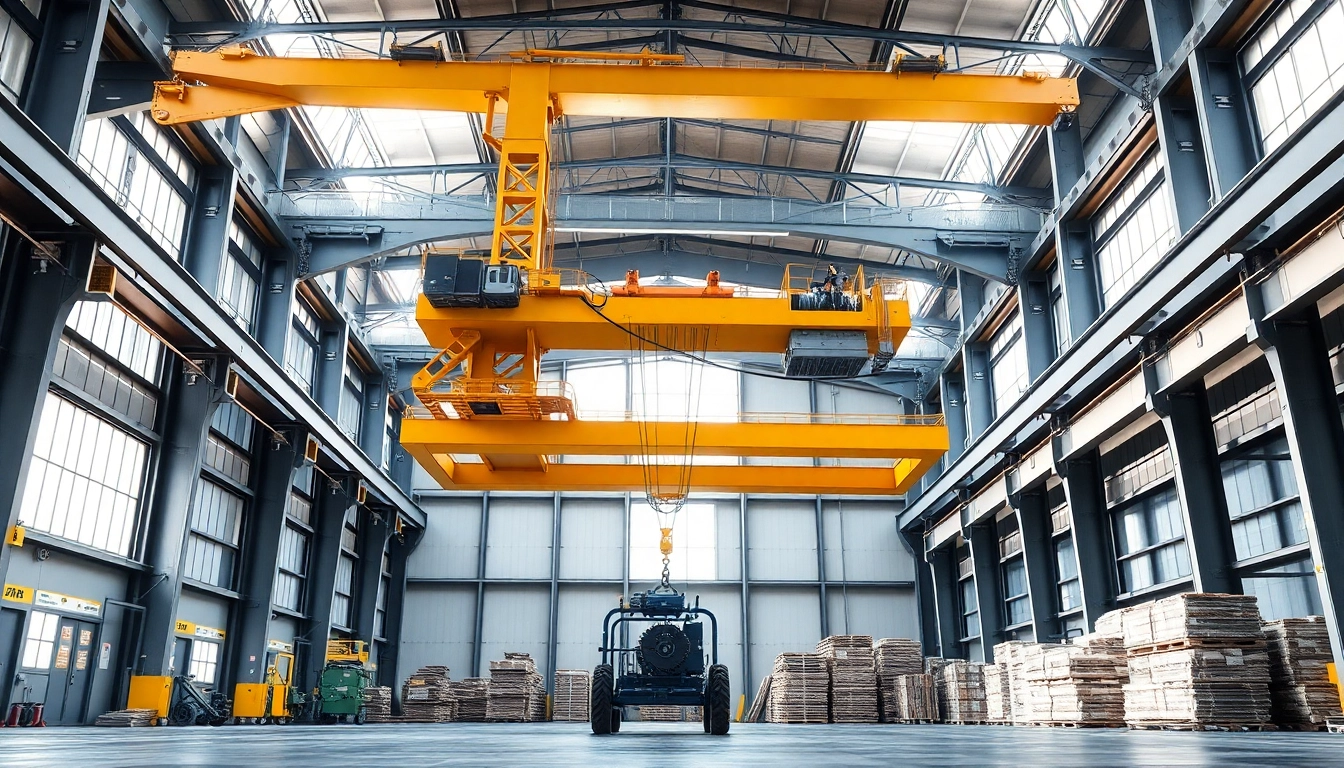
Understanding the Basics of Bridge Cranes
Bridge cranes, also known as overhead cranes, are essential lifting solutions used primarily in industrial environments. Their design allows them to carry heavy loads across large areas, providing an efficient method for moving materials within workplaces such as factories and warehouses. When exploring options, bridge cranes come in various configurations and capacities, catering to the unique operational requirements of different sectors.
What is a Bridge Crane?
A bridge crane is a type of equipment equipped with a hoist, moving platform, and rail system that allows for the transportation of materials from one point to another within a designated area. This type of crane consists of two parallel runways installed at a fixed height, along which the crane’s bridge, or beam, traverses. The hoist mechanism, mounted on the bridge, provides the lift needed to handle loads efficiently, making bridge cranes a critical asset for many industries.
Key Components of Bridge Cranes
Understanding the key components of bridge cranes is vital for anyone involved in the selection, operation, or maintenance of this type of equipment. Here are the essential parts:
- Runways: These are the tracks upon which the bridge travels. They are typically anchored to the building structure to ensure stability.
- Bridge: The horizontal beam that spans the runways, providing the main platform for the hoist.
- Hoist: The lifting device that raises and lowers the load. Hoists can be electric, manual, or pneumatic.
- Controls: These include various electrical and manual systems that allow operators to control the movement of the crane and the hoist.
Types of Bridge Cranes
Bridge cranes can be categorized into several types based on their design and functionality:
- Single Girder Bridge Cranes: Designed with one main beam, these cranes are ideal for lighter loads and are often less expensive.
- Double Girder Bridge Cranes: Featuring two main beams, these cranes provide greater load capacity and are better suited for heavier lifting tasks.
- Freestanding Bridge Cranes: These cranes are not attached to a building structure and allow for flexibility in design and placement within the workspace.
- Workstation Bridge Cranes: They are smaller and designed for low to medium duty applications. These systems are often used in assembly lines and workshops.
Applications of Bridge Cranes in Various Industries
Bridge cranes are versatile tools utilized across many industries, each benefiting from the unique capabilities these cranes offer. Their ability to lift and transport heavy loads makes them indispensable in sectors such as manufacturing, warehousing, and construction.
Manufacturing Sector Utilization
In manufacturing, bridge cranes are routinely used to move materials and products along production lines. They enhance operational efficiency by reducing the need for manual handling and increasing safety. Industries that produce heavy machinery, automotive parts, and more, rely on the heavy lifting capacities of bridge cranes to maintain workflow continuity.
Bridge Cranes in Warehousing and Distribution
Warehouses and distribution centers utilize bridge cranes to facilitate the movement of goods within large storage facilities. By providing a robust solution for loading and unloading trucks, organizing inventory, and managing shipping processes, bridge cranes contribute significantly to operational efficiency and logistics management.
Construction Industry Adaptations
In the construction industry, bridge cranes are employed to handle building materials and equipment, particularly in large-scale projects. Their ability to span vast areas and lift heavy loads makes them ideal for applications such as erecting steel frames and moving large precast components. Utilizing bridge cranes in construction not only speeds up project timelines but also ensures safety on job sites by minimizing manual lifting risks.
Choosing the Right Bridge Crane for Your Needs
Selecting the appropriate bridge crane is essential for maximizing efficiency and ensuring safety. It involves assessing specific operational needs and understanding various crane types and configurations.
Assessing Load Capacities and Span Requirements
Before purchasing or renting a bridge crane, it is crucial to evaluate the load capacities required for your operations. Each crane has a maximum load capacity, which must match or exceed the heaviest items it will lift. Additionally, consider the span requirements; the distance between the runways will determine how far the crane can reach across the workspace.
Modular vs. Custom Solutions
Bridge cranes can be sourced in modular or custom configurations. Modular systems offer a more cost-effective and quicker solution, as they come pre-engineered and ready for installation. Conversely, custom solutions are tailored to specific operational needs, although they often come with a higher price tag and longer lead times. Assessing your unique requirements will help determine the most suitable option.
Maintenance Considerations for Longevity
To ensure the longevity and reliability of your bridge crane, regular maintenance and inspections are vital. Routine checks should include examining the hoist mechanism, ensuring the rails are clear, and testing the control systems. Implementing a preventive maintenance schedule can minimize downtime and repair costs while extending the life of the equipment.
Best Practices for Operating Bridge Cranes Safely
Safety is paramount in any industrial setting, and operating bridge cranes involves specific protocols that must be adhered to minimize risks. Training and ongoing education are critical for operators and personnel involved with crane operations.
Essential Safety Protocols and Procedures
Establishing and following safety protocols is essential when operating bridge cranes. Some key protocols include:
- Always conduct pre-operation inspections to identify any issues before use.
- Use hand signals or radio communications for clear operator communication.
- Never exceed the crane’s load capacities.
- Ensure that no personnel are positioned under a load while in motion.
Training Programs for Operators
Implementing comprehensive training programs for crane operators is crucial. Operators should be trained in not only the technical aspects of operating the crane but also in safety procedures and emergency protocols. Certification may be required depending on local regulations and the specific crane being used.
Common Hazards and How to Mitigate Them
Common hazards associated with bridge crane operations include falling loads, operator error, and mechanical failures. Mitigation strategies should be in place, including:
- Routine maintenance checks to prevent mechanical failures.
- Safety barriers to prevent unauthorized personnel from entering operational areas.
- Use of properly rated lifting equipment and practices to avoid falling loads.
Future Trends in Bridge Crane Technology
As the industrial landscape evolves, so too does the technology surrounding bridge cranes. Innovations are being integrated into crane systems to improve efficiency, safety, and functionality.
Innovative Technologies Shaping Bridge Cranes
Recent advancements have brought automation and smart technologies to bridge crane systems. These include load monitoring systems that provide real-time data to operators, enhancing decision-making and operational efficiency. Additionally, manufacturers are developing energy-efficient models that significantly reduce operating costs.
Smart Cranes: The Role of Automation
Smart cranes equipped with automation capabilities allow for integrated systems that can operate independently or semi-autonomously. These cranes can perform repetitive tasks, freeing operators to focus on more complex functions. Integrating automation technology not only increases productivity but also enhances safety by reducing human error.
Predicting Industry Changes by 2025
By 2025, the bridge crane industry is expected to undergo significant transformations. Greater emphasis on sustainability and energy-efficient operations will likely drive the design of new crane systems. Moreover, the integration of IoT (Internet of Things) technologies will facilitate smarter operations, enabling predictive maintenance and providing detailed performance analytics, fundamentally changing how bridge cranes are utilized in various settings.
About the Author